Voice rooms
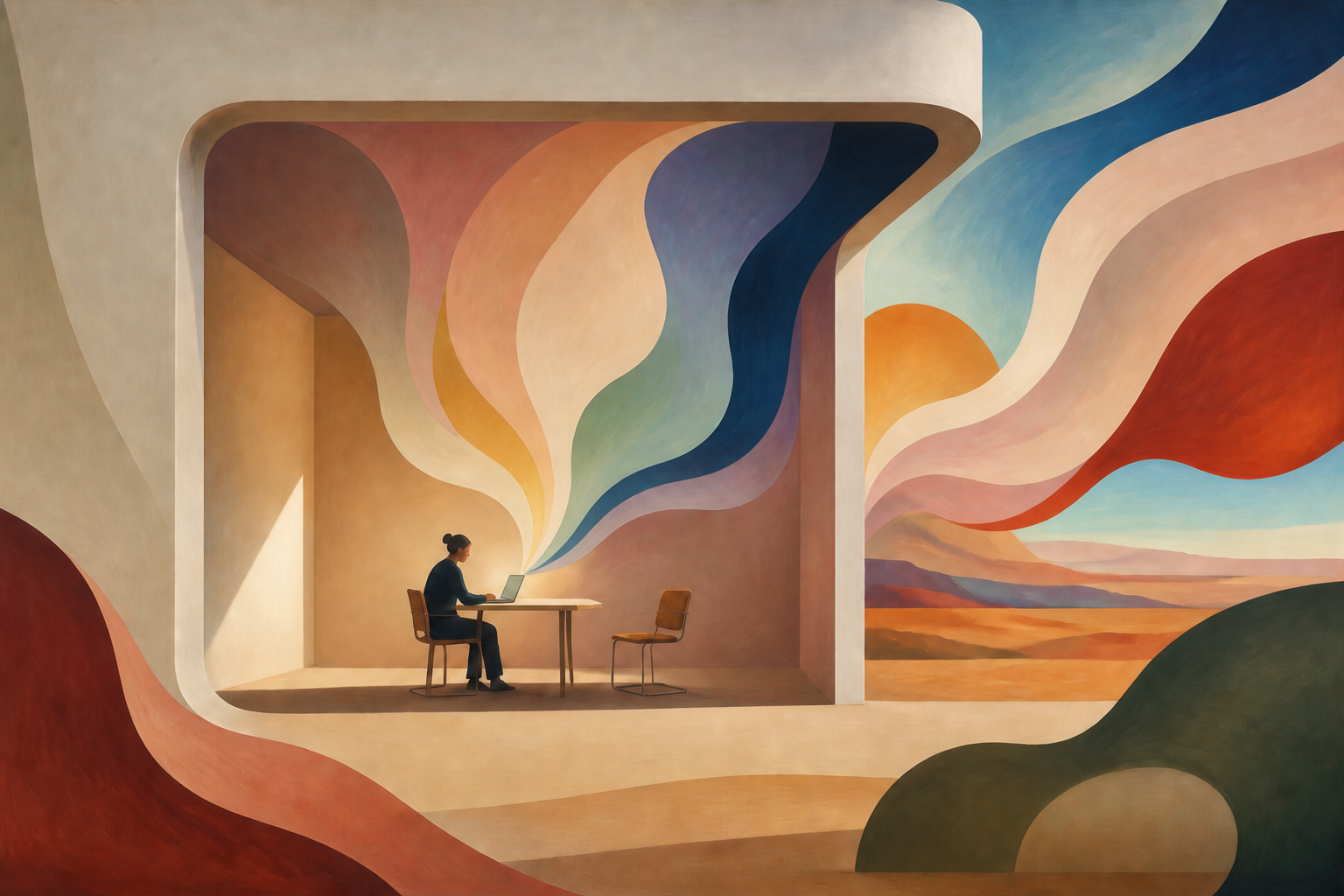
Over the last few months at Density, people started looking for somewhere to go.
They weren’t looking for a place to take calls or join meetings. They were having long conversations—with their computers. They were talking through engineering problems, crafting launch plans, and doing Salesforce cleanup, all by voice.
As voice became a more natural and common way to work with AI (thank you Superwhisper, Wispr Flow, and ChatGPT and Claude Voice), a new workplace problem emerged for us: people wanted to think and work out loud, but our office hadn’t been designed for that.
A new mode of work
Working alongside a coding agent by voice is fundamentally different from typing quietly at your desk. Many people, especially early in their AI journey, felt self-conscious talking out loud to their computer in the middle of an open office. We get it—it’s a surprisingly vulnerable thing to do, and nobody wants to be obnoxious or distract the people around them.
The obvious solution was to book a meeting room. But nobody wanted to be that person who camped out in a four-person meeting room just to work alone. Phone booths weren’t much better. They’re great for quick sessions, but can feel cramped when you’re sketching ideas on a whiteboard, pacing while you think, or spending an hour talking through a complex problem with your AI model. There just wasn’t a space designed for this new way of working, so we tried something simple.
A room for talking to AI
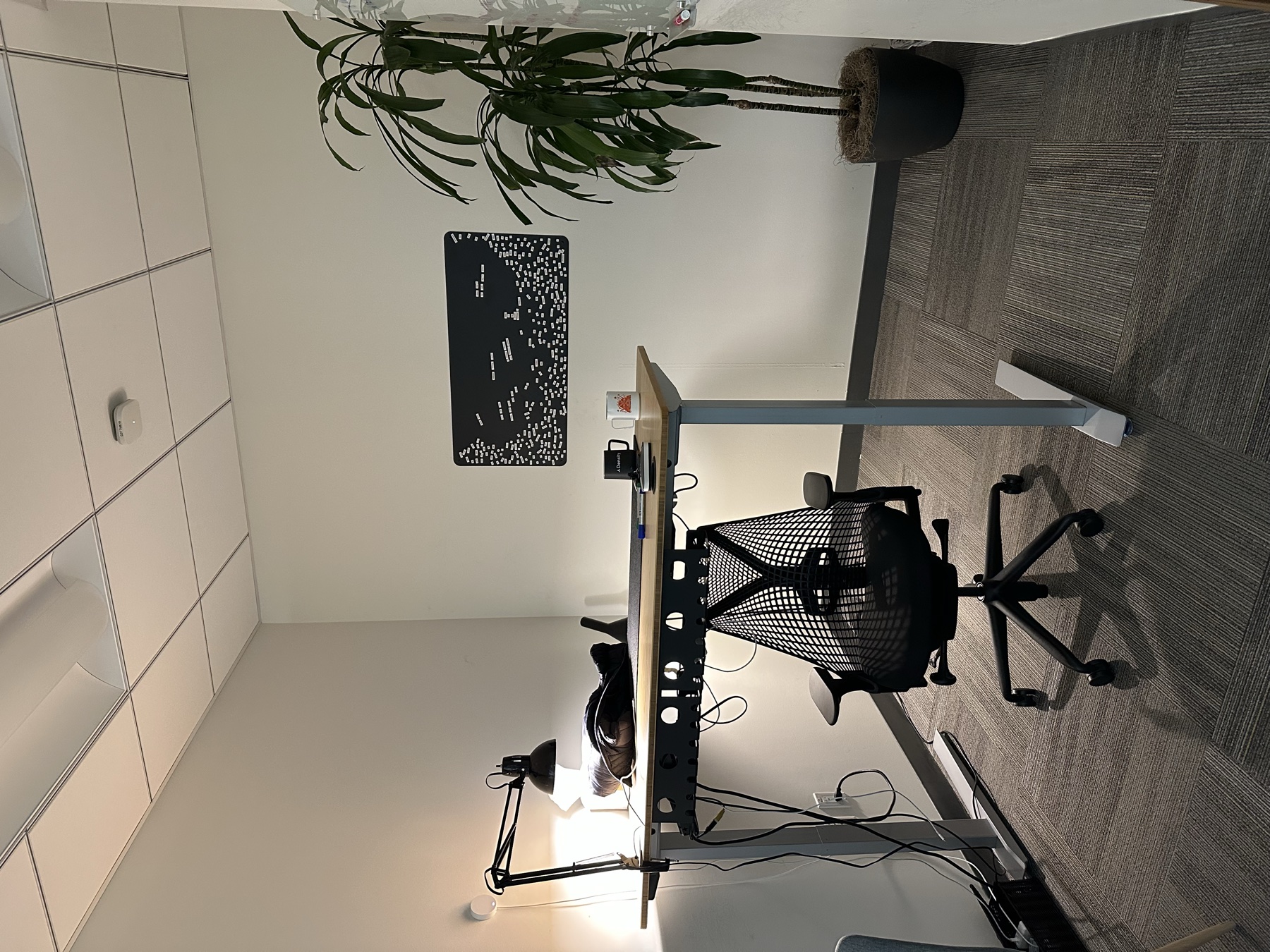
We converted several of our three- and four-person meeting rooms into drop-in AI workspaces. We made the change in less than 30 minutes with a couple of strong people and a good playlist. The rooms are intentionally simple: an adjustable desk, a small lamp, a comfortable chair, good acoustics, and a door you can close. They’re not explicitly private offices, although they use the same design. They aren’t reserved or reservable. They’re just places where someone can spread out, think aloud, and work conversationally with AI.
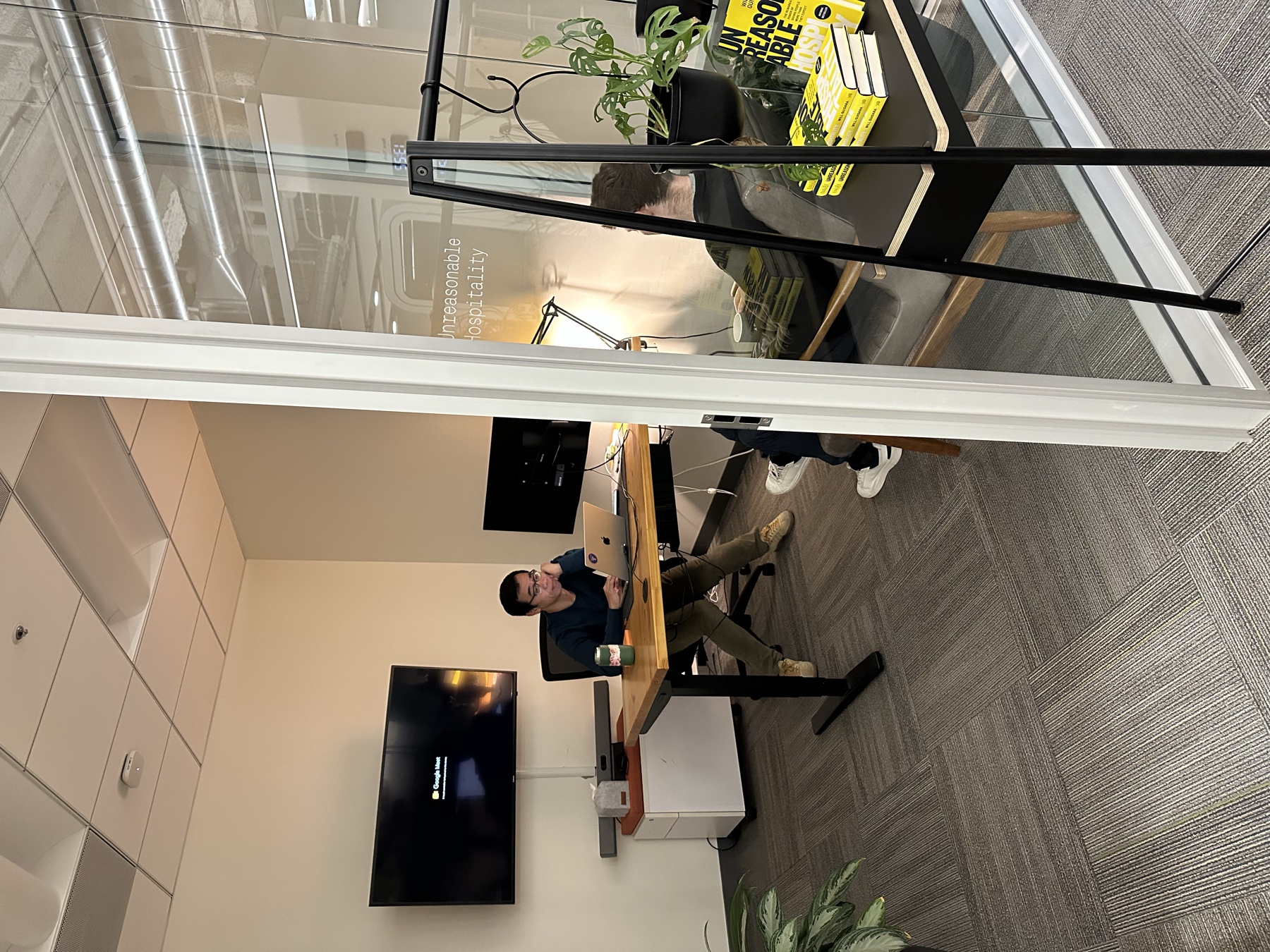
One room also has two extra chairs, which turned out to matter more than we expected.
Most of the time, one person is inside dictating context, brainstorming, or working through a problem with a coding agent. Then they hit a decision point. You’ll see them wave in a colleague, hash something out for five or ten minutes, and return immediately to their work. AI work, we found, rarely stays solitary. It moves between individual thinking, conversation with a model, and human collaboration.
Your environment matters
When a new AI behavior like using voice feels awkward, the behavior itself may not be the problem. Sometimes the space is. Since furniture is movable, changing the environment is a cheap and reversible experiment. Our voice rooms have been popular enough that we’re converting a few more meeting rooms into them.
P.S. Yes, people still talk to their laptops out in the open. We think the option of a dedicated room will help more people adopt an objectively great new form of work.