The context diagram
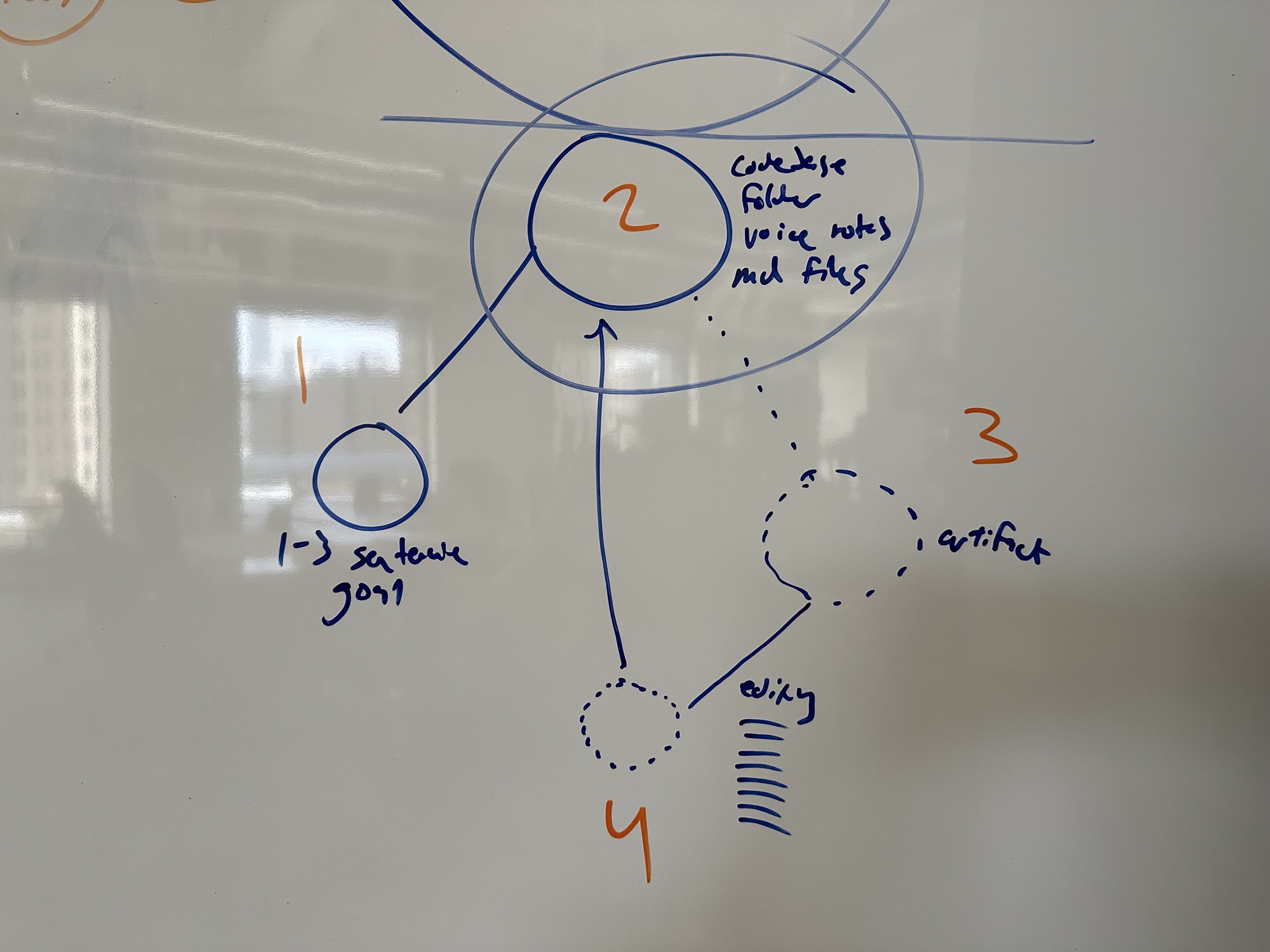
Imagine a partial diamond. Each point describes one part of the way you work with an agent.
I. A three-to-five-sentence goal
Start with the outcome you want. It might be “I want to be at inbox zero,” “I want to design an application that recommends investments,” or “I want a better-structured calendar.” Keep the goal small enough that the agent can understand what success means.
II. A context dump
The top of the diamond is context: documents, files, a codebase, a folder, screenshots, transcripts, prior work, and examples that inspire you. Give the agent the material it needs to understand the goal instead of expecting it to infer your situation.
III. The artifact created by the agent
The right side is the artifact. The agent takes the goal and context, works through the problem, and produces something: a plan, a website, code, a report, or another concrete result.
IV. The edited artifact
The bottom of the diamond is your work with the agent. You inspect the artifact and give focused feedback about its structure, quality, length, sources, or behavior. Then the agent edits it into something you are willing to use.
A useful rule is to edit the artifact down to about 80% of its original size. Editing is not just correction. It is where judgment turns a broad first result into a precise one.
The next loop
The improved artifact becomes part of the next context dump. Set a new three-to-five-sentence goal, add the previous context and feedback, and include the artifact you just improved. The loop repeats: goal, context, artifact, edited artifact.
The agent makes the first artifact. You decide what deserves to survive into the next version.